Choosing packaging for exported vegetables is not simply a matter of ordering the thickest sheet or copying an existing box. The right PP corrugated plastic boxes must fit the crop, carry the required weight, remain stable in a pallet stack and support the cooling process throughout the export route.
For buyers, the practical question is: which combination of internal size, GSM, thickness, structure and ventilation is suitable for this produce and supply chain?
What Must an Agricultural Export Box Handle?
A produce box may pass through packing, precooling, cold storage, palletizing, inland transport, ocean freight and destination distribution. During that route it can face moisture, compression, vibration, repeated handling and temperature changes.
Codex guidance for fresh fruit and vegetable transport also identifies rough handling, stacking compression, impact, vibration and high humidity as important packaging conditions.
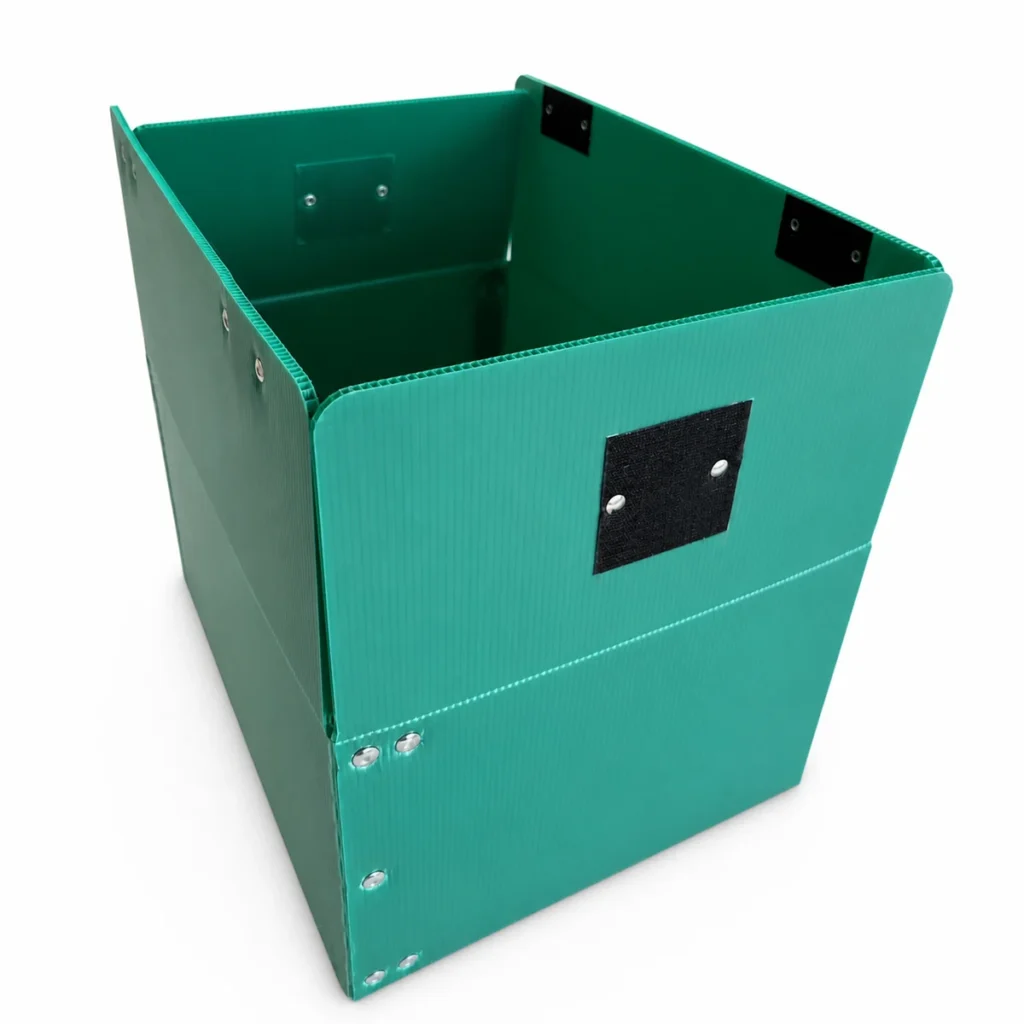
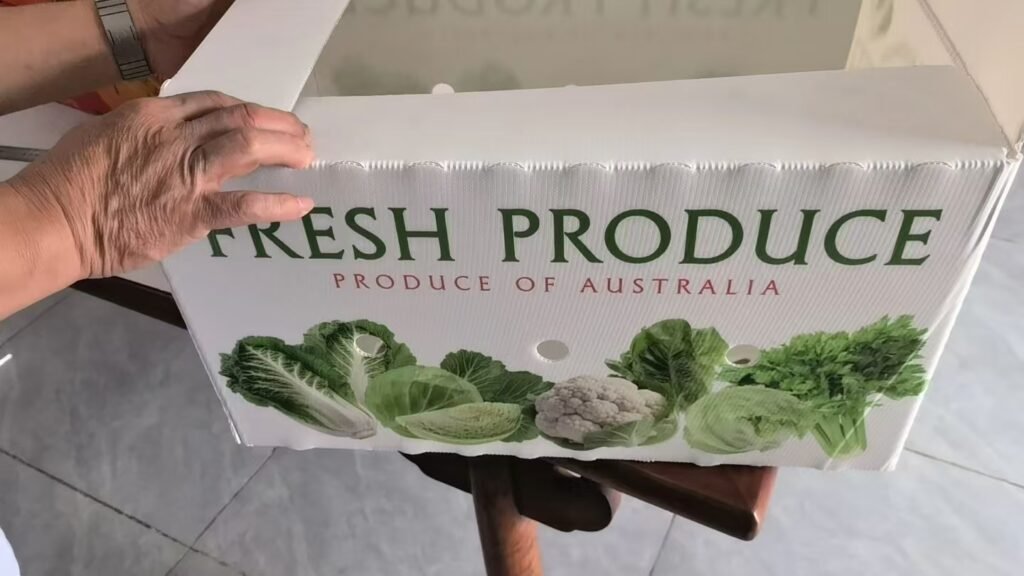
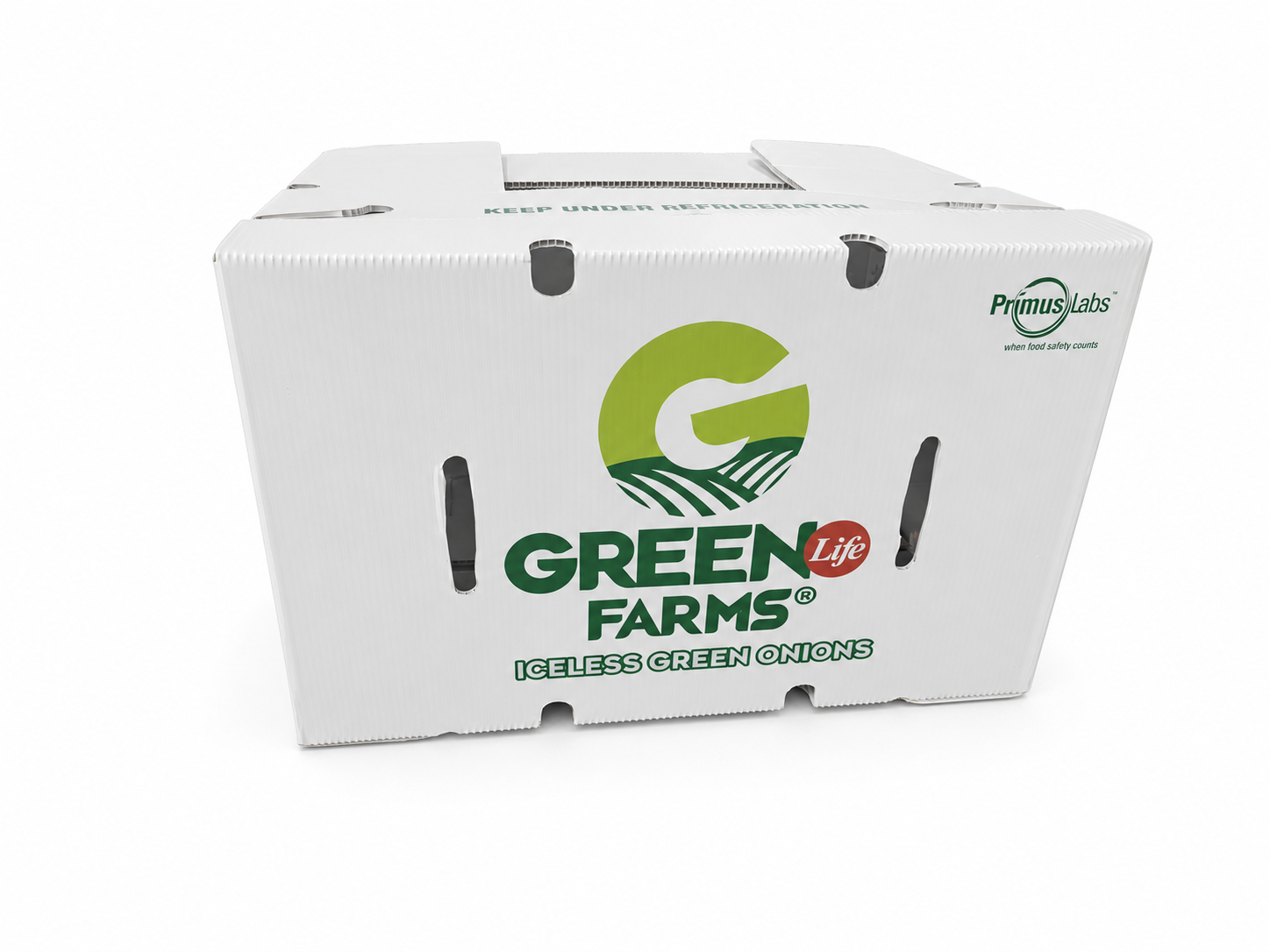
PP corrugated plastic is useful for this type of agricultural export packaging because the material does not absorb water like fiber-based packaging. It can also be customized with ventilation holes, drainage holes, hand holes, locking tabs and printing.
For a closed-loop farm or distributor route, reusable produce packaging can reduce repeated purchases of single-use boxes. The return distance, cleaning process and handling damage should be reviewed before choosing a reusable structure.
The material name alone does not guarantee performance. GSM, thickness, flute direction, box structure and vent placement must be evaluated together.
Start With the Correct Internal Dimensions
The first step is to define the finished internal dimensions of the assembled box: length × width × height.
Internal dimensions describe the usable space for the produce. They are not the external dimensions and they are not the unfolded sheet dimensions used in production.
To confirm the correct size:
- Pack the actual produce in its intended orientation and quantity.
- Include any liner, pad, divider, ice bag or protective insert.
- Leave enough clearance to avoid crushing, stem puncture or lid pressure.
- Avoid excessive empty space that allows movement during transport.
- Check the resulting external size against the pallet plan.
The same crop does not always use the same box. Variety, grade, trim length, piece count and target net weight may change the required internal dimensions.
Before approval, calculate boxes per pallet layer, number of layers, loaded pallet height, gross weight and required air channels. Do not reduce the internal size only to improve pallet utilization if the produce becomes overfilled.
How to Choose GSM and 2–10 mm Thickness
GSM means grams per square meter and describes the area weight of the sheet. Thickness describes the distance between the two outer PP skins. Xianghui Pack can customize PP corrugated sheet thickness from 2–10 mm.
GSM and thickness are related, but they are not interchangeable. A thicker low-density sheet is not automatically stronger than a thinner high-GSM sheet. Finished-box performance also depends on dimensions, formulation, flute direction, folds, locks and openings.
Use the GSM weight calculator to estimate theoretical box-blank weight from unfolded dimensions and GSM.
The following table provides starting points for discussion, not universal standards:
| Packed load and route | Initial GSM reference | Preliminary thickness reference |
|---|---|---|
| Light load, lower stack and protected distribution | 600–700 GSM | 2–3 mm |
| Moderate load and standard palletized export | 700–750 GSM | 3–5 mm |
| Higher load, taller stack or demanding wet route | 750–800 GSM | 3–5 mm |
| Large panels, repeated use or special heavy-duty design | Project-specific, commonly around 800 GSM | 5–10 mm |
Net product weight is important, but it cannot determine GSM by itself. A wide box with large unsupported panels behaves differently from a compact box carrying the same weight. Stack height, storage time, humidity and transport vibration must also be considered.
Four Reference Produce Box Specifications
The following examples are based on finished internal dimensions, not external or unfolded sizes.
| Produce application | Internal dimensions | Reference GSM | Reference stacking |
|---|---|---|---|
| Broccoli Packaging Boxes | 495 × 280 × 268 mm | 800 GSM | 8–9 layers |
| Celery Packaging Boxes | 495 × 355 × 283 mm | 750 GSM | 7–8 layers |
| Asparagus Packaging Boxes | 250 × 224 × 278 mm | 750 GSM | 9–11 layers |
| Snow Pea Packaging Boxes | 380 × 279 × 135 mm | 750 GSM | 9–11 layers |
These figures are reference configurations, not fixed guarantees for every buyer. Final stacking depends on the packed weight, thickness, material formulation, closure, pallet pattern, temperature and storage duration. Representative loaded-box testing is required before mass production.
How Should Ventilation and Drainage Be Designed?
Ventilation openings must allow cooling air to reach the produce without removing too much material from the load-bearing walls.
For moisture-resistant structures with project-specific ventilation and drainage, review our waterproof PP produce boxes.
The opening pattern should consider:
- Produce type and heat load
- Room cooling or forced-air cooling
- Liners or pads that may block airflow
- Airflow direction through the pallet
- Pallet stacking pattern
- Required compression strength
- Water or melted-ice drainage
FAO postharvest guidance explains that airflow must pass through the complete stacked load, not only through one box. Side vents should therefore align after palletizing.
One UC Agriculture and Natural Resources guide uses approximately 5% of the box-end area as a starting point for a specific forced-air cooling system. This number should not be copied into every PP produce box. The crop, cooling equipment, liner and structural requirement must be considered together.
Drainage holes should be placed at the lowest collection points of the assembled box. They should avoid the main load-bearing corners, locking tabs and fold lines. Too many or poorly positioned openings can reduce stacking strength.
Cold Storage and Export Transport
The box should support the cold chain, but packaging alone cannot cool the produce. Before selecting a cold chain produce packaging design, provide:
- Produce temperature at packing and precooling method
- Minimum storage and transport temperature
- Cold-room duration and humidity
- Contact with water, condensation or ice
- Handling and impact conditions while cold
PP performance depends on the complete material formulation, so the actual assembled box should be tested at the required temperature, packed weight and stack height.
For detailed material guidance, see Choosing Packaging Materials for −10°C and −30°C Cold Storage.
Printing and Structural Customization
Common custom options include sheet color, logo, handling marks, ventilation, drainage, hand holes, locks, reinforced corners, lids and internal inserts.
UV printing can be used for samples or suitable short runs. Flexographic printing is normally used for bulk production and requires printing plates. Buyers should provide editable artwork and approved color references before production.
What Information Should Buyers Provide?
Complete project information helps the supplier recommend the right specification and prepare an accurate quotation.
| Information | Details to provide |
|---|---|
| Produce | Product, variety, grade and packing orientation |
| Packed weight | Net weight per box |
| Dimensions | Required finished internal dimensions |
| Inner pack | Liner, pad, divider, ice or other insert |
| Pallet plan | Pallet size, boxes per layer and number of layers |
| Cooling | Precooling method, airflow and ventilation needs |
| Storage | Minimum temperature, humidity and duration |
| Transport | Route, transit time and handling frequency |
| Customization | Structure, drainage, printing and colors |
| Order | Quantity, destination and delivery schedule |
If an existing box is available, send photos, an assembled sample and its internal dimensions. Do not send only the unfolded blank size unless the cutting drawing is clearly labeled.
Validate the Box Before Mass Production
A practical sample test should use the actual produce and target net weight. Verify the usable internal dimensions, bottom deflection, wall bulging, locking points and vent alignment. Then build the planned pallet stack and condition it in the real cold and humid environment.
The approved production specification should record the internal dimensions, thickness, GSM, material, structure, vent and drain drawing, artwork and test conditions.
Frequently Asked Questions
What is the difference between internal and external dimensions?
Internal dimensions describe the usable space after assembly. External dimensions are used for pallet and container planning. The unfolded sheet size is a separate production dimension.
Is higher GSM or greater thickness always better?
No. GSM and thickness must be evaluated with box size, material formulation, structure, ventilation, packed weight and stacking requirements. Using unnecessary material also increases cost and shipping weight.
Can one specification be used for different vegetables?
Not automatically. Broccoli, celery, asparagus and snow peas differ in geometry, packing orientation, ventilation and box height. The actual packing method and load must be checked for each product.
How many layers can PP produce boxes be stacked?
There is no universal number. It depends on the box design, product weight, pallet pattern, temperature, humidity and storage time. The figures in the reference table should be verified with loaded boxes.
Choose the Box From the Complete Export Route
The best corrugated plastic produce boxes are not selected by price, GSM or thickness alone. Begin with the crop and finished internal dimensions, then confirm packed weight, pallet pattern, stacking height, ventilation, drainage, cold-room conditions and transport risks.
For broccoli, celery, asparagus or snow pea packaging, send the actual packing data before requesting a final specification. Xianghui Pack can review the internal size, 2–10 mm thickness, GSM, structure and reference stacking requirements for a custom fresh produce packaging project.
View Fresh Produce Packaging Solutions or request a custom packaging review.