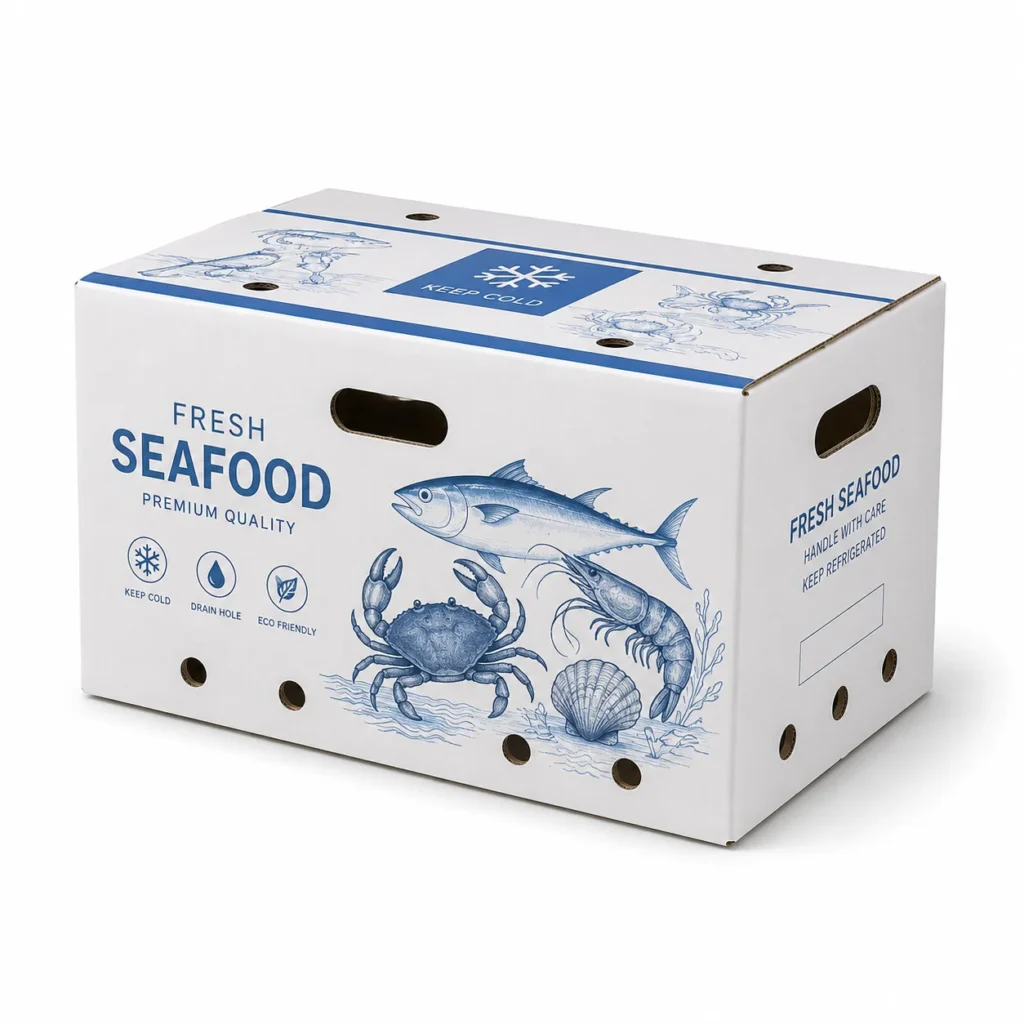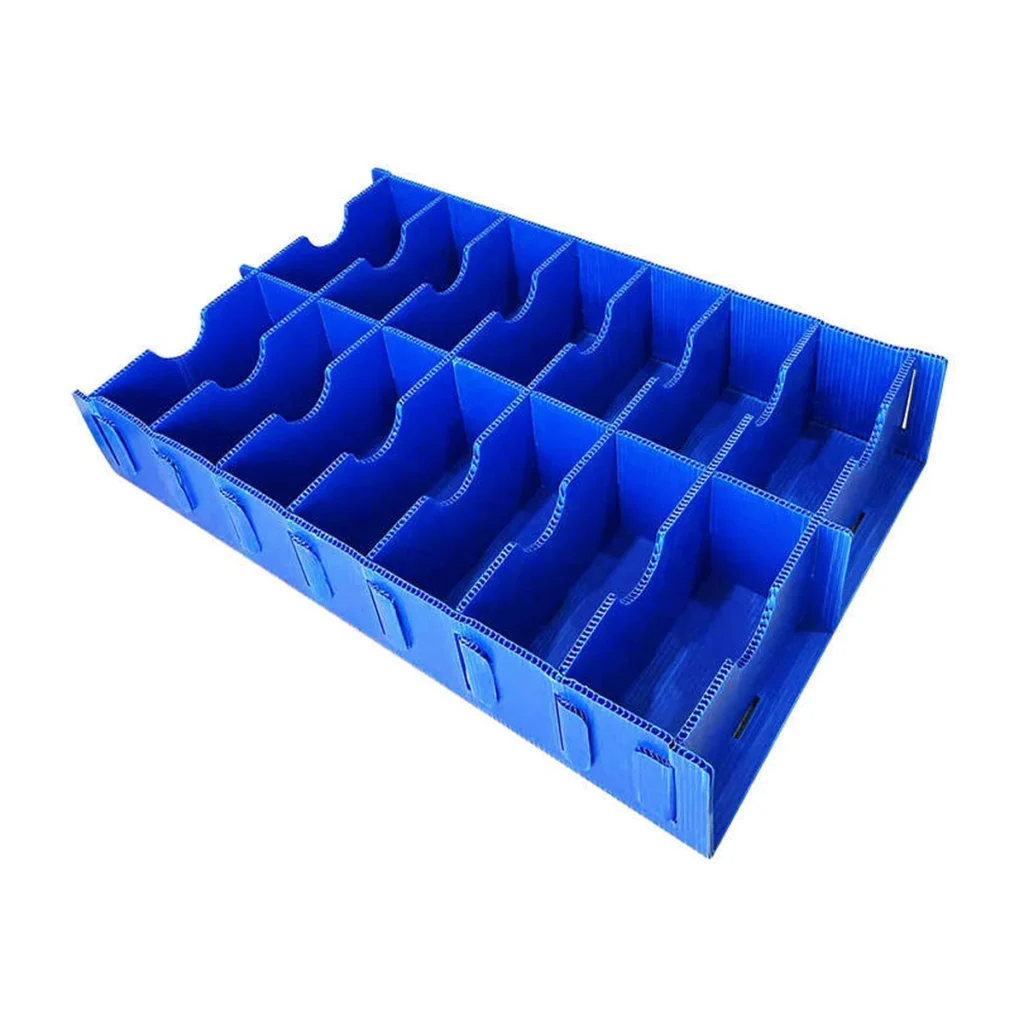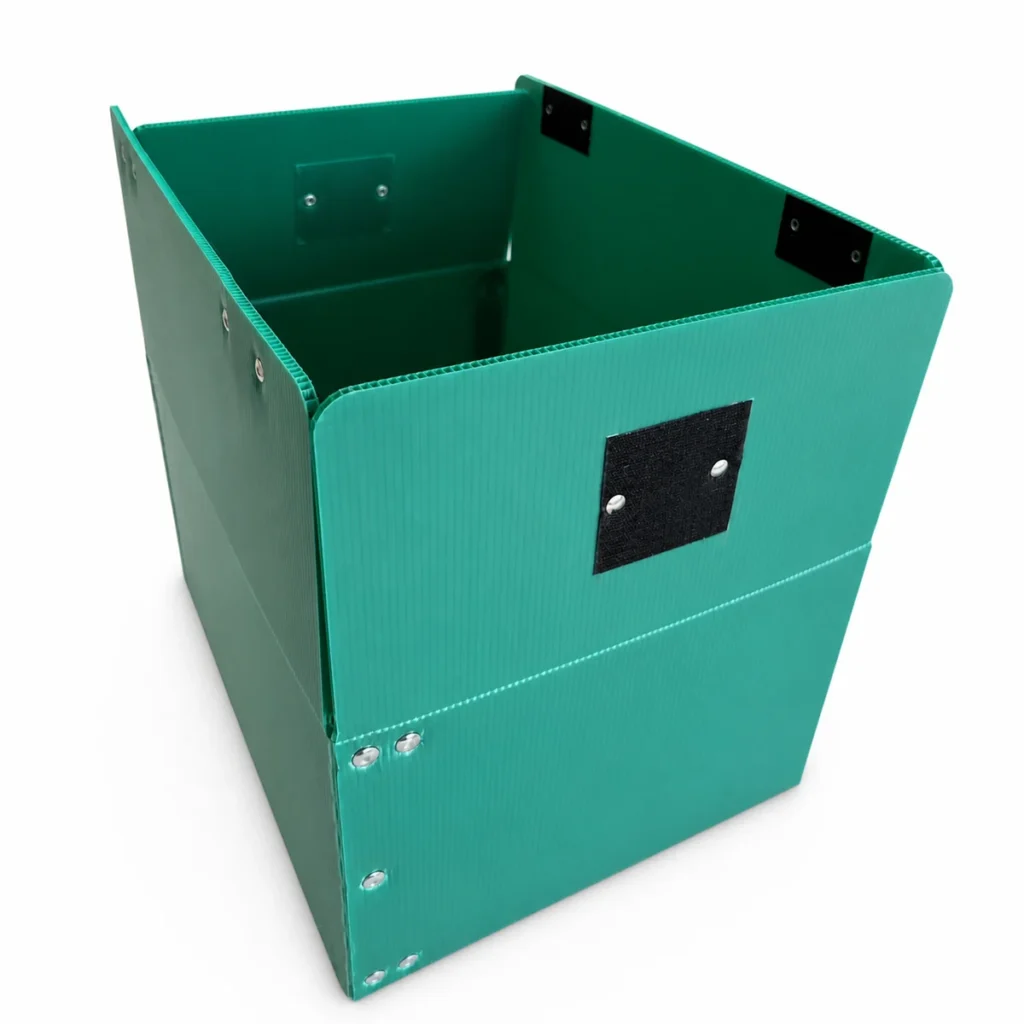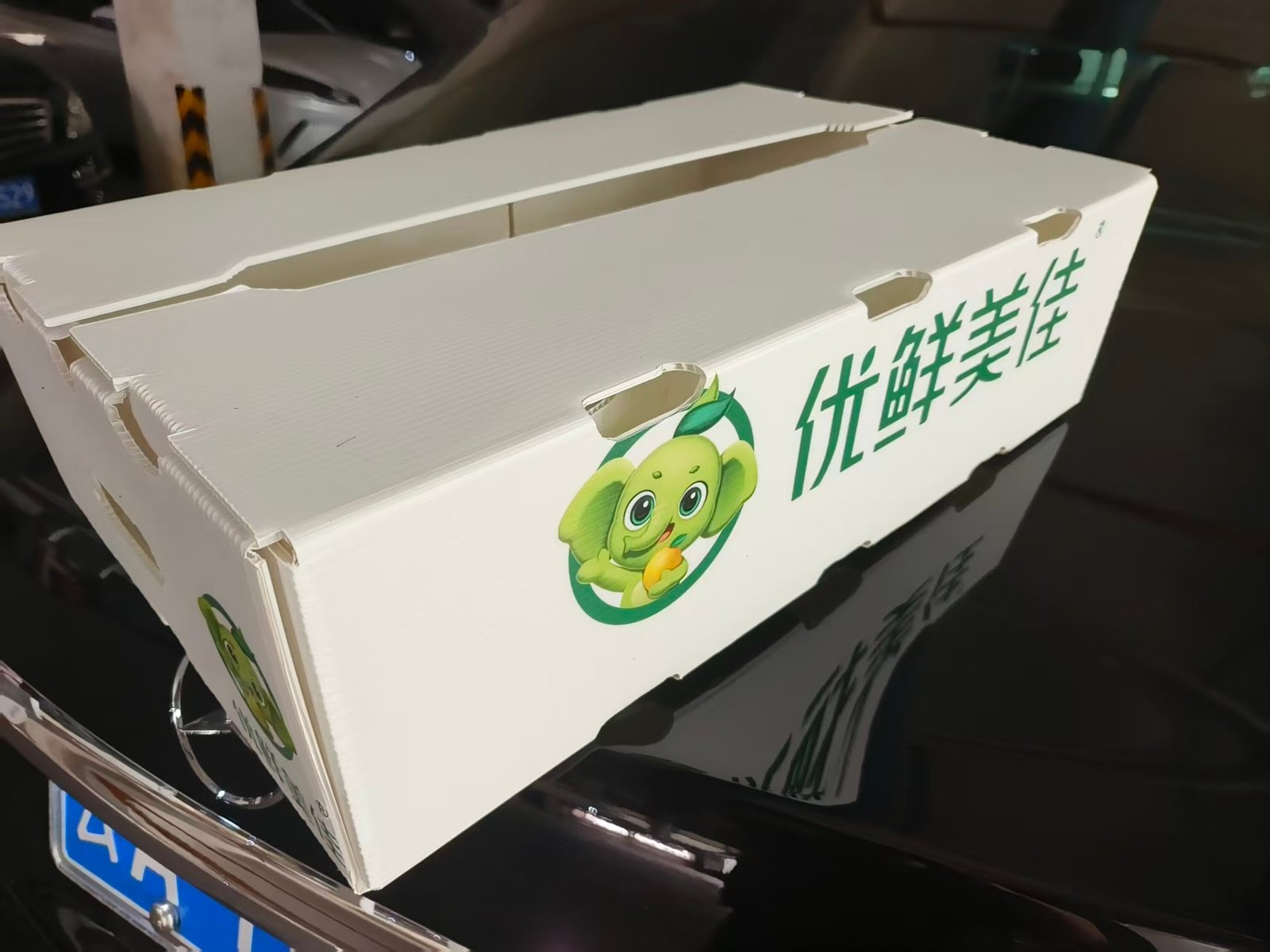
For decades, expanded polystyrene (EPS) has been widely used for fresh and chilled seafood transportation. Its light weight and thermal insulation make it suitable for many cold-chain applications.
But seafood packaging decisions are becoming more complicated.
Environmental regulations, waste-management costs, freight efficiency and growing interest in reusable packaging are forcing seafood processors and exporters to look beyond the purchase price of a box.
The question is no longer simply whether an alternative material is more sustainable.
It is whether it can actually perform in a seafood supply chain.
Performance Still Comes First
Seafood packaging has demanding requirements.
Boxes may be exposed to melting ice, high humidity, low temperatures, stacking pressure and repeated handling. For exporters, these conditions can continue for several days.
Any alternative to conventional seafood packaging therefore needs to prove several basic things:
- Water resistance
- Structural strength
- Stacking performance
- Cold-chain stability
- Suitability for the required transport time
One field test discussed within the seafood packaging industry involved boxes being used during summer temperatures above 35°C. The packaging was deliberately tested under difficult conditions to identify possible failures before wider adoption.
The important point is not the material itself.
It is the testing method.
Seafood companies increasingly want packaging performance to be demonstrated under actual operating conditions rather than judged only from material specifications.
This is particularly relevant for PP corrugated plastic boxes.
Because polypropylene does not absorb water, PP corrugated boxes can retain their structure in wet environments. Their hollow fluted construction also provides rigidity without the weight of a solid plastic box.
However, waterproofing and thermal insulation are two different requirements.
A PP corrugated plastic box should not automatically be considered a direct thermal replacement for EPS.
For long-distance chilled seafood shipments, the complete packaging system may need to combine:
Box structure + insulation + coolant + transport time + required product temperature
This is a much more realistic way to evaluate seafood packaging.
What Can We Learn From a 74-Hour Salmon Shipment?
A recent seafood cold-chain case study provides a useful example.
Fresh salmon fillets were transported through the following route:
Oslo → Heathrow → JFK → Boston
The total supply-chain time was approximately 74 hours.
The alternative packaging system used phase-change ice packs and was tested against conventional EPS packaging.
According to the case study, both packaging systems maintained comparable temperatures during the journey.
This is significant because one of the biggest concerns surrounding alternative seafood packaging is thermal performance.
But temperature was not the only factor considered.
The study also highlighted freight and logistics efficiency.
This is where seafood packaging economics become more interesting.
If two packaging systems can both maintain the required product temperature, buyers can then compare other factors such as:
- Packaging volume
- Storage requirements
- Inbound freight
- Outbound freight
- Labour
- Product damage
- Waste handling
- Reuse potential
In other words, comparing packaging only by unit price may give an incomplete result.
Packaging Price and Packaging Cost Are Not the Same
A seafood company may purchase one box for a lower price and still spend more money across the entire supply chain.
EPS is a good example.
Its thermal insulation is well established, but EPS packaging also occupies significant physical space.
For companies consuming thousands of seafood boxes every week, that volume affects:
- Warehouse capacity
- Truck utilisation
- Container loading
- Internal handling
- Waste storage
- End-of-life management
This is why total packaging cost is becoming more important than unit price.
A more useful calculation is:
Total packaging cost = box cost + transport + storage + handling + product loss + waste management
For reusable packaging, another calculation is required.
Cost per use = initial box cost ÷ actual number of reuse cycles
But this number alone is still not enough.
Cleaning, inspection, return transportation and box-loss rates must also be included.
That explains why reusable seafood packaging can work extremely well in some supply chains and poorly in others.
Where Does Reusable Packaging Make Sense?
Reusable packaging works best when the packaging can realistically come back.
For example:
Seafood processor → cold storage → distributor → collection → cleaning → reuse
This kind of controlled regional supply chain can make repeated use practical.
The situation is very different for a one-way international export shipment.
If a seafood box travels thousands of kilometres and there is no practical collection system at the destination, returning an empty box may cost more than the packaging itself.
This means claims such as “reusable for 20–50 cycles” should always be considered together with the customer’s actual logistics model.
The physical durability of the box is only one part of reuse.
A real reusable packaging system also needs:
- Collection
- Reverse logistics
- Cleaning
- Inspection
- Storage
- Redistribution
Without these steps, reuse exists only as a theoretical possibility.
EPR Is Changing How Companies Calculate Packaging Costs
Another important change is Extended Producer Responsibility, or EPR.
The general principle behind EPR is that producers and importers take greater responsibility for packaging after it becomes waste.
This changes how companies think about packaging.
Traditionally, the packaging decision may have ended once the product reached the customer.
Increasingly, businesses also need to consider what happens afterward.
That includes:
- Collection
- Recycling
- Disposal
- Waste-management fees
- Material recovery
As EPR systems expand, packaging that is difficult or expensive to manage at end of life can create additional costs.
This is one reason seafood companies are paying more attention to recyclable and reusable packaging systems.
PPWR Pushes the Discussion Further in Europe
Europe’s Packaging and Packaging Waste Regulation (PPWR) is also pushing packaging decisions toward recyclability, material reduction and reuse.
For packaging manufacturers, this changes the conversation.
Simply describing a product as:
“100% recyclable”
may eventually be insufficient on its own.
Buyers are likely to ask more practical questions:
Can the packaging actually enter an existing recycling stream?
Can it be collected after use?
Can it be reused before recycling?
How many cycles can it realistically complete?
How is it cleaned between uses?
What happens when it reaches the end of its service life?
These questions are becoming part of packaging procurement rather than purely environmental discussions.
Where PP Corrugated Plastic Boxes Fit
PP corrugated plastic boxes have characteristics that can make them suitable for certain seafood applications.
These include:
- Waterproof construction
- Resistance to humid environments
- Lightweight hollow structure
- Good stacking performance
- Custom sizes and structures
- Printable surfaces
- Potential for repeated use
- Recyclable polypropylene-based construction
They can be particularly relevant for seafood processing plants, fish markets, cold stores, regional distribution and closed-loop transport systems.
For long-distance chilled seafood exports, however, the box should be evaluated as part of a complete thermal system.
Insulation requirements, coolant selection, shipment duration and target product temperature all need to be considered.
That is a more accurate approach than treating one material as a universal replacement for another.
Seafood Packaging Is Becoming a Supply-Chain Decision
The seafood industry is unlikely to replace one packaging material with another overnight.
EPS will continue to have applications where its insulation performance is valuable.
At the same time, waterproof, reusable and recyclable packaging systems are becoming more relevant as logistics costs and packaging regulations change.
For seafood processors and exporters, the more useful question is therefore not:
“Which box is cheaper?”
or even:
“Which material is more sustainable?”
The better question is:
Which packaging system can protect the seafood, maintain the required temperature and deliver the lowest practical cost across the entire supply chain?
That is increasingly where seafood packaging decisions are heading.