This case study examines a real RFQ from a South African automotive supply-chain customer for interior-component packaging. XIANGHUI PACK completed requirement classification, packaging concept analysis and a budgetary technical-commercial proposal. The project was delivered in September 2026. The configurations discussed below document the earlier RFQ analysis and are not presented as a final shipment specification.
| Project type | Automotive interior-component packaging RFQ |
|---|---|
| Packaging stage | Delivered September 2026; RFQ concepts reviewed below |
| System reviewed | Outer containers plus replaceable internal dunnage |
| Quantity distinction | Pack Qty meant parts per packaging unit, not packaging purchase quantity |
At the RFQ stage, final purchasing quantities and annual packaging demand required confirmation. Final purchase quantities are not disclosed here. This distinction mattered because a loading requirement could not be treated as an order volume.
Project status: Delivered in September 2026. This case traces the design and quotation work behind the project. It does not claim verified load or scratch-test results, customer acceptance or measured performance improvements.
Project Requirements
The RFQ covered 145 packaging items: 114 rigid plastic outer-bin related items, 25 steel trolley or rack items, and six special PP corrugated outer-box items. Components included instrument panel parts, door trims, centre consoles and finished interior panels.
The requested protection addressed scratching, deformation, unwanted movement and part-to-part contact during repeated internal handling and returnable logistics. These were design objectives; no measured protection results were available.
Why a Single Box Design Was Not Enough
The RFQ combined different component formats and protection needs. Our analysis separated the outer container from its internal dunnage: together they would form a complete packaging unit. This allowed container selection and internal protection to be reviewed as connected but distinct decisions.
Rigid returnable bins, PP corrugated boxes and steel racks or trolleys were considered as outer formats. Internal concepts included PP partitions, replaceable inserts, fabric slots and shaped protective supports. These were project options evaluated, not a claim that every material or container type was manufactured in-house.
Packaging Structures Evaluated
PP Corrugated Boxes
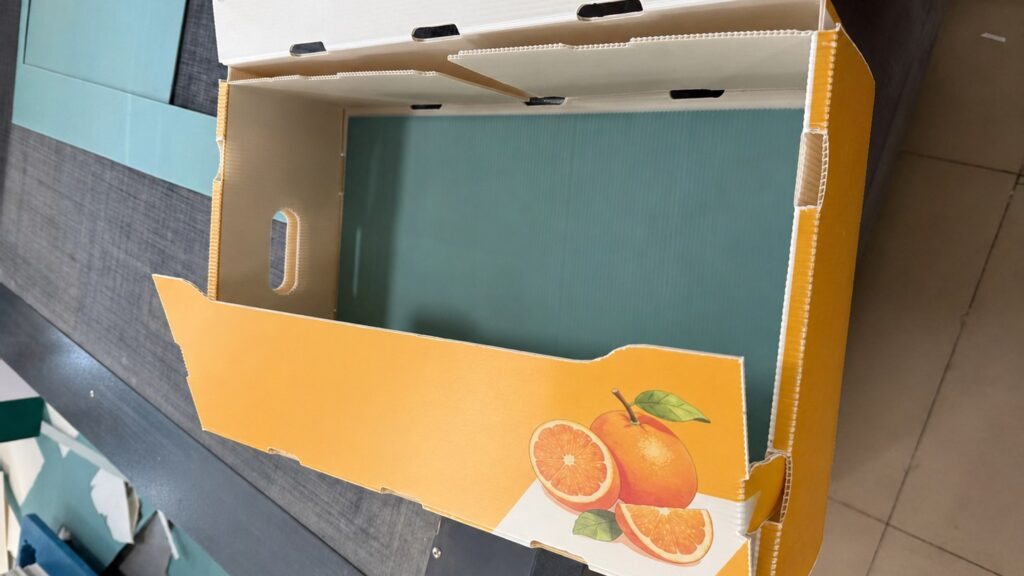
Four RFQ lines used a proposed box approximately 600 × 400 × 120 mm for eight parts per unit. Two further lines used a long-box concept approximately 860 × 120 × 80 mm for ten parts. These were budgetary configurations, not final production specifications. The PP corrugated box structures required review together with their internal protection.
Dividers & Inserts
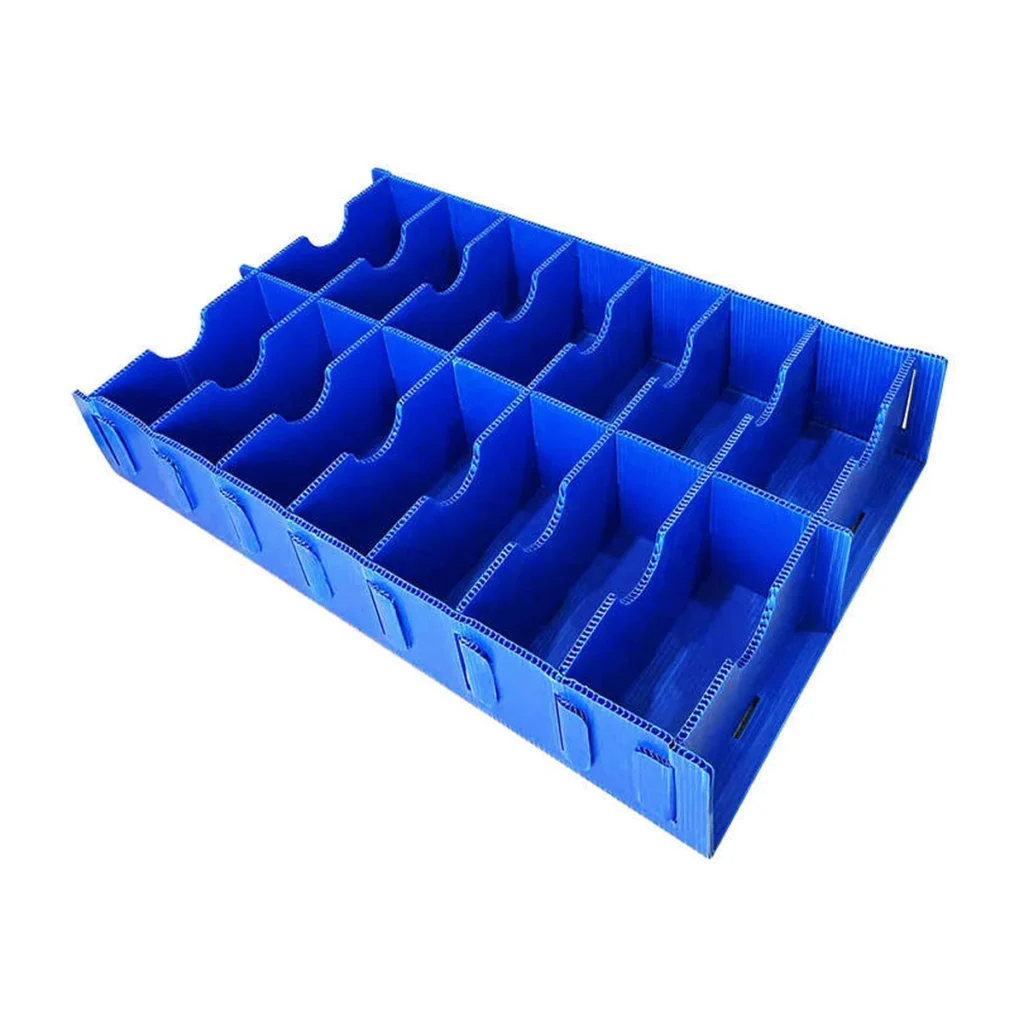
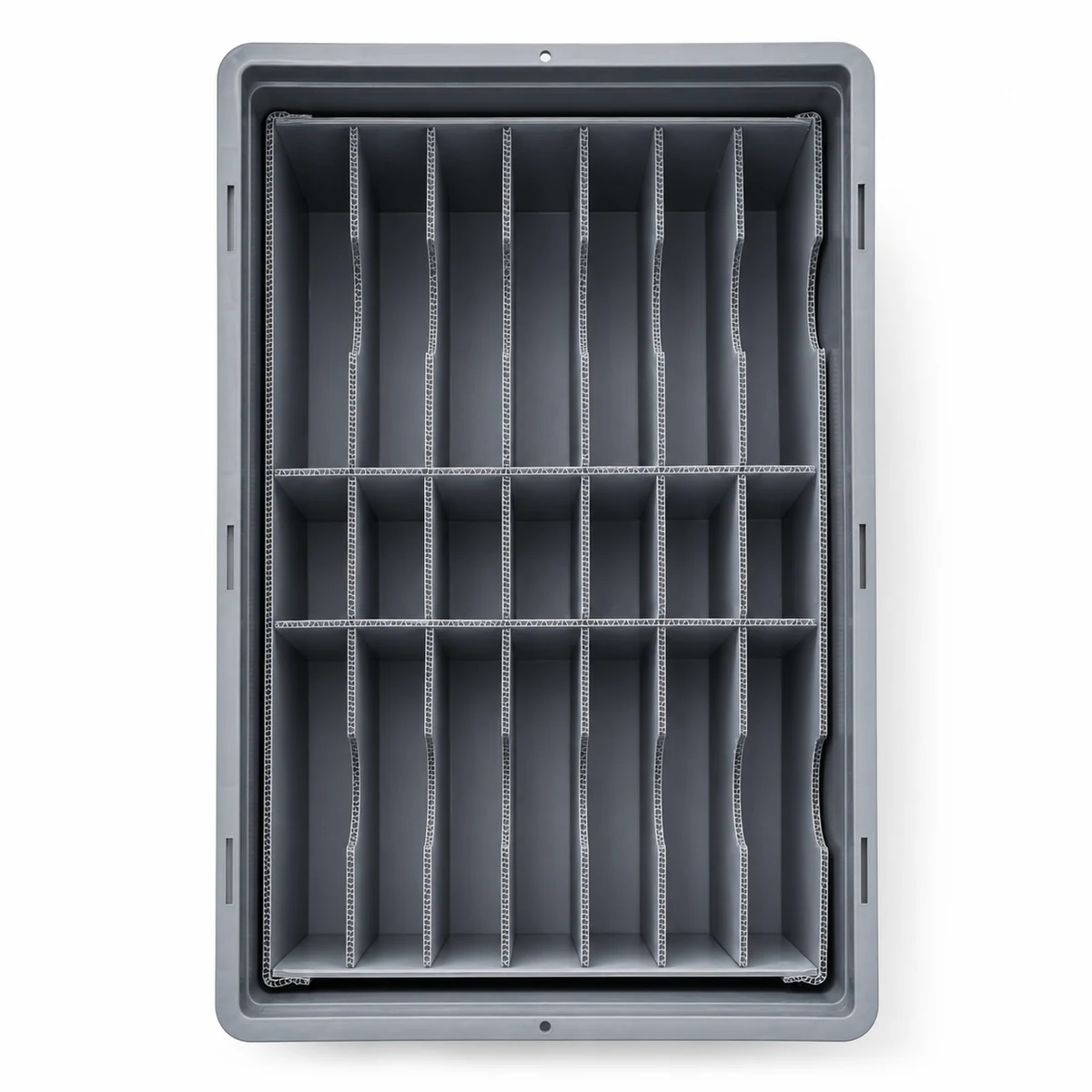
One approximately 400 × 600 × 220 mm bin was evaluated with a PP partition concept of around 50 compartments for 50 parts. Another approximately 600 × 800 × 320 mm container used a proposed simple partition set for six parts. Both illustrate how dividers and inserts were specified around the loading concept. At the RFQ stage, usable dimensions and final layouts were subject to confirmation and drawing or sample approval. The examples are not a record of final approved drawings.
Custom Dunnage
The custom dunnage concept addressed part location and contact within the selected container. A separate rigid-bin configuration, approximately 600 × 400 × 250 mm, proposed 12 fabric slots for visible or scratch-sensitive components. Surface-contact and scratch testing were required before approval. EVA/EPE supports were considered only where shaped location or support was needed; no testing success was claimed.
How the Packaging Was Designed
- Classify the RFQ: separate outer-container categories, protection requirements and parts-per-unit figures.
- Select a container strategy: evaluate existing standard rigid-bin moulds before considering new tooling.
- Develop internal concepts: use PP separation structures, fabric slots or shaped supports according to the stated protection need.
- Prepare representative configurations: prepare representative configurations and a technical-commercial proposal, with replaceable inserts where practical.
- Record open points: flag dimensional conflicts, loading assumptions and the prototype and validation work needed before design approval.
These steps describe the documented RFQ analysis and proposal preparation. The project was subsequently delivered in September 2026; the design-stage examples do not establish the final drawings or validated performance.
Key Engineering Considerations
Fit and orientation: the long-box example paired a proposed 860 × 120 × 80 mm box with a part shown at approximately 845 × 60 × 100 mm. Those dimensions raised a fit question. At that stage, the orientation, nesting method, usable internal size and ten-part loading arrangement had not been physically validated. The final resolution is not detailed in this account. External dimensions alone could not settle the design.
Surface contact: the fabric-slot concept required testing with the actual contact conditions. Selecting a softer interface did not prove that scratching would be prevented.
Replaceability: separating internal dunnage from the outer container was intended to allow worn inserts to be replaced without necessarily discarding the complete unit. Existing moulds and matched protection levels were considered to avoid unnecessary tooling and replacement cost. No percentage saving was verified.
Validation: during the RFQ, compartment counts, layer arrangements, loading direction, contact requirements and load and stacking requirements were recorded as review points. Prototype selection, final drawings and sample approval were still open at that stage. This account does not assert the outcome of those individual checks or disclose commercial terms.
What Buyers Can Learn From This Project
First, distinguish parts per container from the number of containers being purchased. Second, check part geometry, orientation and usable space together before freezing a box dimension. Third, treat the validation plan as part of the proposal: material selection is not evidence of load capacity, scratch protection or service life.
This RFQ shows the questions that a proposal must resolve before production. For the broader application context, see our industrial and automotive packaging solutions.
Need Packaging for Automotive Parts?
Share part drawings, dimensions, weight, quantity per container and handling requirements. Our team can review the outer packaging and internal protection together, identify open technical points and recommend a PP corrugated box, divider or dunnage concept for evaluation.