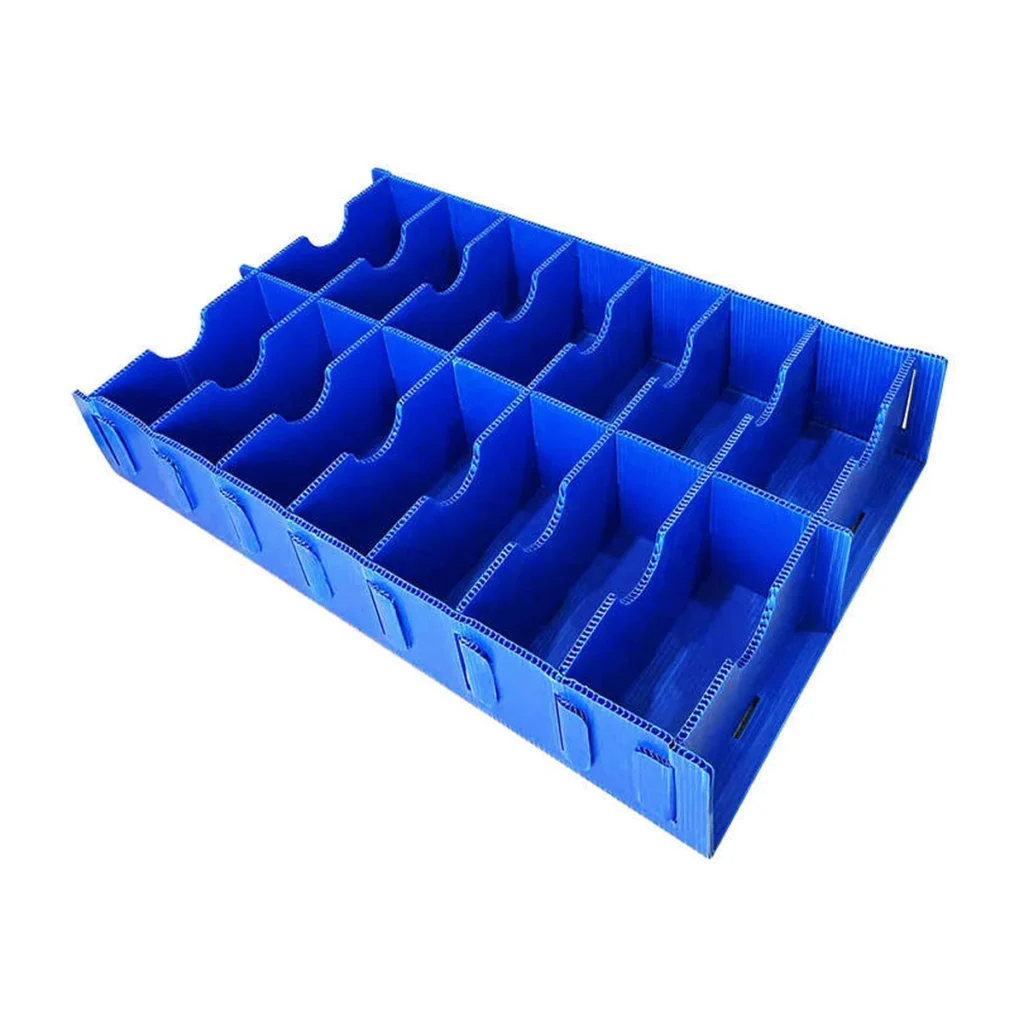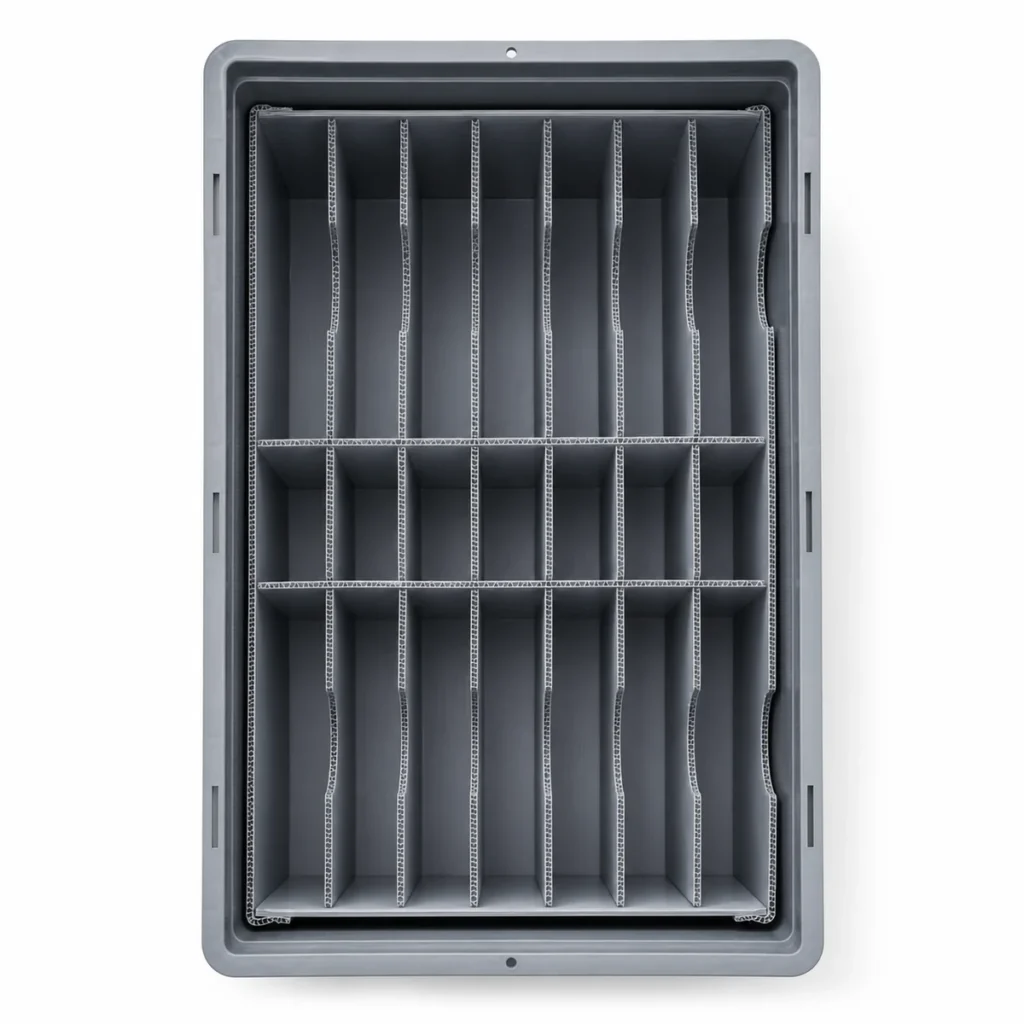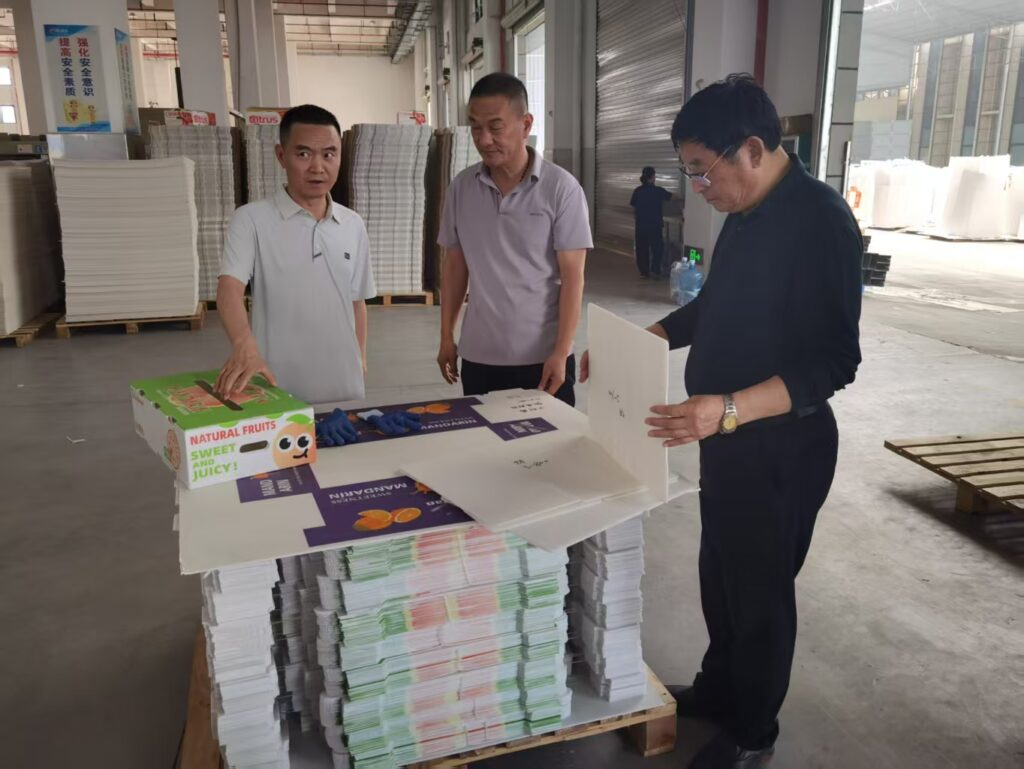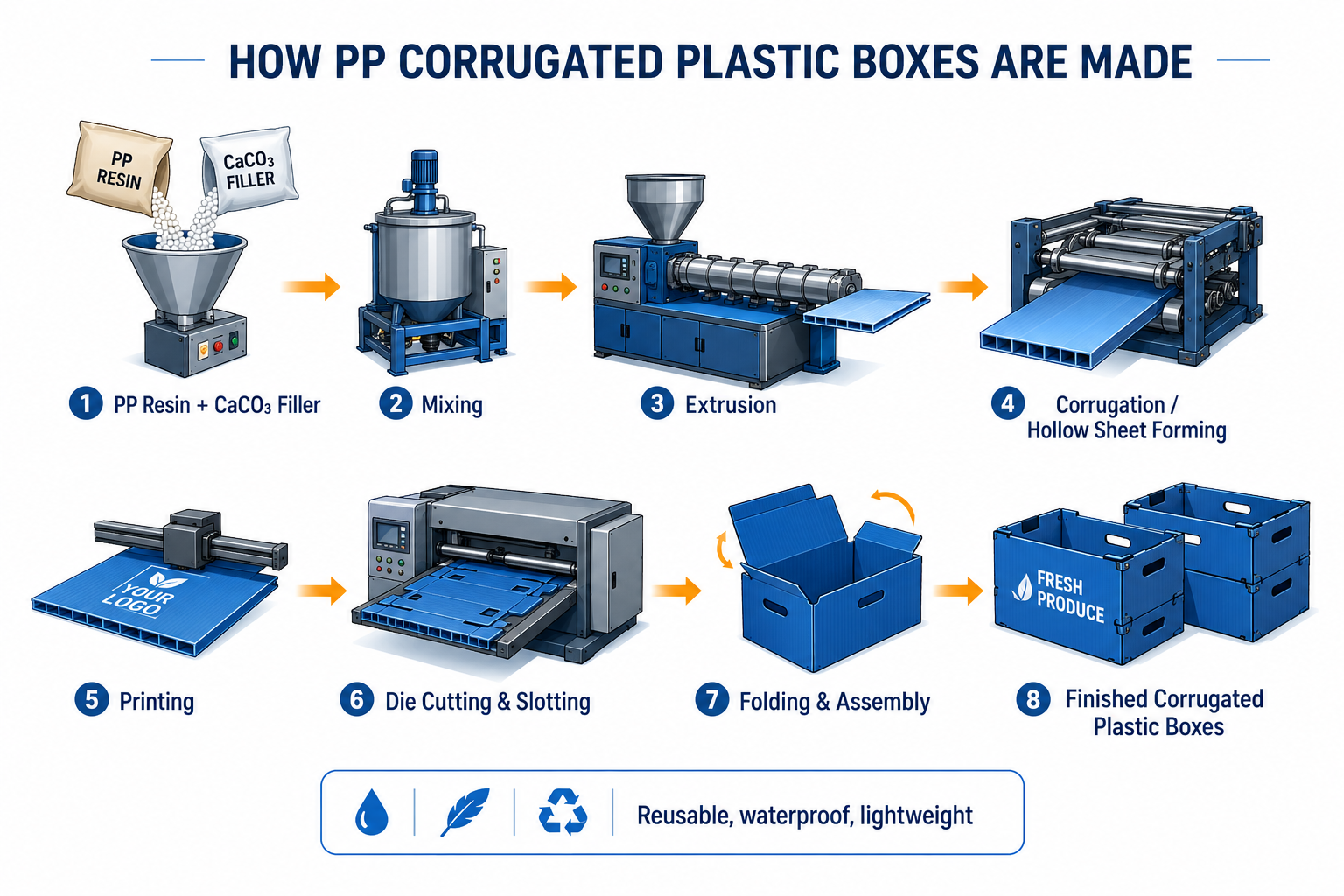
This article explains how PP resin is prepared, extruded, printed, die-cut, assembled and inspected to produce a custom PP corrugated plastic box.
1. Raw Materials and Formulation
Food-contact-grade polypropylene resin can be used for projects with relevant food-contact requirements. The main materials include PP resin and calcium carbonate. Color masterbatch and project-specific functional materials may also be added for low-temperature, impact-resistance or other performance requirements.
Common material grades used in Chinese production include T30S, 7042 and 8003. These grades provide different processing, stiffness and toughness characteristics, so the material must be selected according to the application.
Common formulation examples include:
- 30 parts calcium carbonate and 70 parts PP
- 50 parts calcium carbonate and 50 parts PP
The PP component may also include virgin PP, recycled PP or reclaimed PP waste material. Different raw materials, formulations and production technologies can create substantial differences in both price and performance.
They may affect the sheet’s color, odor, consistency, stiffness, toughness and low-temperature impact resistance.
This is why not every PP corrugated plastic box uses the same formulation. Boxes for fresh produce, cold storage and returnable transport have different performance requirements. For application-specific selection, review our PP corrugated produce boxes for ventilation, drainage and export handling.
2. Mixing and Hollow-Sheet Extrusion
After the formulation is confirmed, the PP resin, calcium carbonate, color masterbatch and functional materials are weighed and mixed in the required proportions.
The mixture enters the extruder, where it is heated and melted. It then passes continuously through a hollow-sheet die that forms the two outer skins and internal supporting ribs.
The resulting corrugated plastic sheet is cooled and calibrated after leaving the die. Its color, thickness and GSM can be adjusted according to the order specification.
Thickness and GSM are not the same measurement. Thickness describes the distance between the two outer surfaces, while GSM describes the actual material weight per square metre. Sheets with the same thickness can have different GSM values and performance.
3. How Sheet Area and GSM Are Calculated
GSM means grams per square metre. Standard specifications are 600 / 700 / 800 / 900 / 1000 / 1100 / 1200 GSM, while some project-specific configurations use 750 GSM.
When the material formulation, thickness and box structure remain the same, a higher GSM means that more material is used per square metre. It normally provides better stiffness, load capacity and stacking performance, but it also increases box weight and purchasing cost.
The unfolded sheet area is calculated as follows:
Sheet area (m²) = unfolded length (mm) × unfolded width (mm) ÷ 1,000,000
The theoretical sheet weight is:
Theoretical sheet weight (g) = sheet area (m²) × GSM
Use the GSM weight calculator to estimate theoretical sheet or box-blank weight from unfolded dimensions and GSM.
Consider a produce box with an unfolded sheet size of 1371 × 428 mm:
1371 × 428 ÷ 1,000,000 = 0.5868 m²
The theoretical sheet weight at different GSM specifications is:
| Sheet Specification | Sheet Area | Theoretical Weight |
|---|---|---|
| 600 GSM | 0.5868 m² | Approx. 352 g |
| 700 GSM | 0.5868 m² | Approx. 411 g |
| 750 GSM | 0.5868 m² | Approx. 440 g |
| 800 GSM | 0.5868 m² | Approx. 469 g |
| 900 GSM | 0.5868 m² | Approx. 528 g |
These figures represent the theoretical sheet weight before die cutting. The final box weight is also affected by ventilation holes, hand holes, drainage openings, die-cut waste and production tolerances.
The calculation shows why two boxes with exactly the same dimensions can have significantly different material usage, weight, performance and price.
4. Printing, Die Cutting and Assembly
After extrusion, the sheet is printed with the customer’s logo, colors and handling information.
UV printing can be used for samples. Flexographic printing is normally used for mass production and requires printing plates.
The printed sheet is then die-cut according to the approved cutting drawing. This process creates the box outline, folding lines, locking tabs, hand holes, ventilation holes, drainage openings and other structural details.
After die cutting, the flat blank is folded and assembled using locking tabs, welding or mechanical fasteners, depending on the box design.
5. Quality Inspection
Quality inspection should cover more than sheet thickness. Important checks include:
- Raw material and formulation batch
- Sheet thickness and GSM
- Finished internal and external dimensions
- Printing color, position and adhesion
- Die-cut holes and folding lines
- Locking and assembly
- Loaded-box and stacking performance
For fresh produce export, cold storage or higher stacking requirements, a sample box should be tested with the actual packed weight before the final material formulation, GSM and box structure are approved.
Conclusion
When purchasing PP corrugated plastic boxes, comparing only dimensions, thickness and unit price is not enough.
Two boxes may have the same appearance and thickness but use completely different PP materials, calcium carbonate ratios, virgin or recycled content and GSM specifications. These differences are a major reason why quotations and product performance can vary significantly between suppliers.
Before placing an order, buyers should confirm the material type, formulation requirements, thickness, GSM, unfolded sheet area, finished dimensions, packed weight and stacking conditions.