When we talk about packaging, most of the attention usually goes to transportation.
Can the box carry the weight?
Can it be stacked safely?
Will it keep its shape during a long trip?
All of that matters.
But once the products arrive at a warehouse, cold room or supermarket, things become much less predictable.
Some products are taken out. New stock is added. Boxes are moved, turned around and stacked again. A neat pallet can become completely different after a few rounds of handling.
For fresh produce and seafood, there is even more to think about.
The packaging may stay in cold storage, deal with moisture and condensation, be moved several times, and sometimes remain with the product until it reaches the sales floor.
So I don’t think a box has finished its job just because the shipment arrived safely.
What happens after delivery matters too
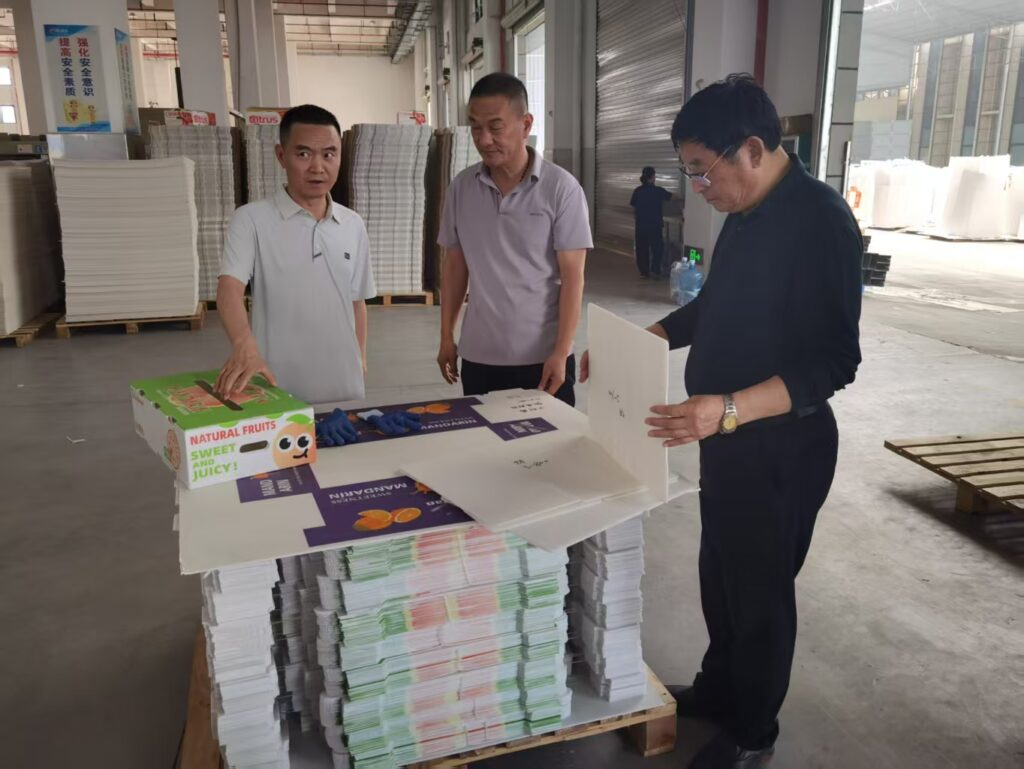
This is one reason PP corrugated plastic boxes work well in these kinds of situations.
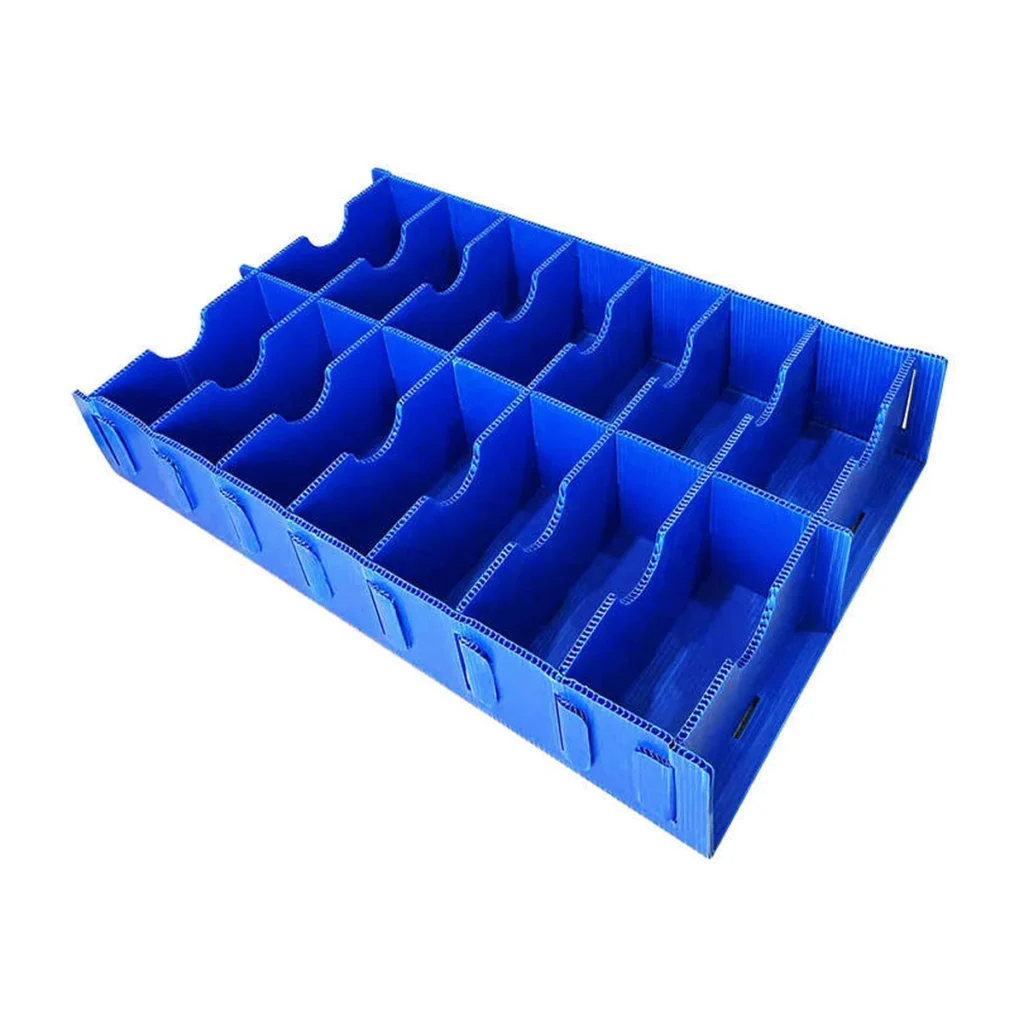
The hollow structure gives the box enough rigidity for stacking while keeping the overall weight relatively low.
More importantly, the box can be designed around the way it will actually be used.
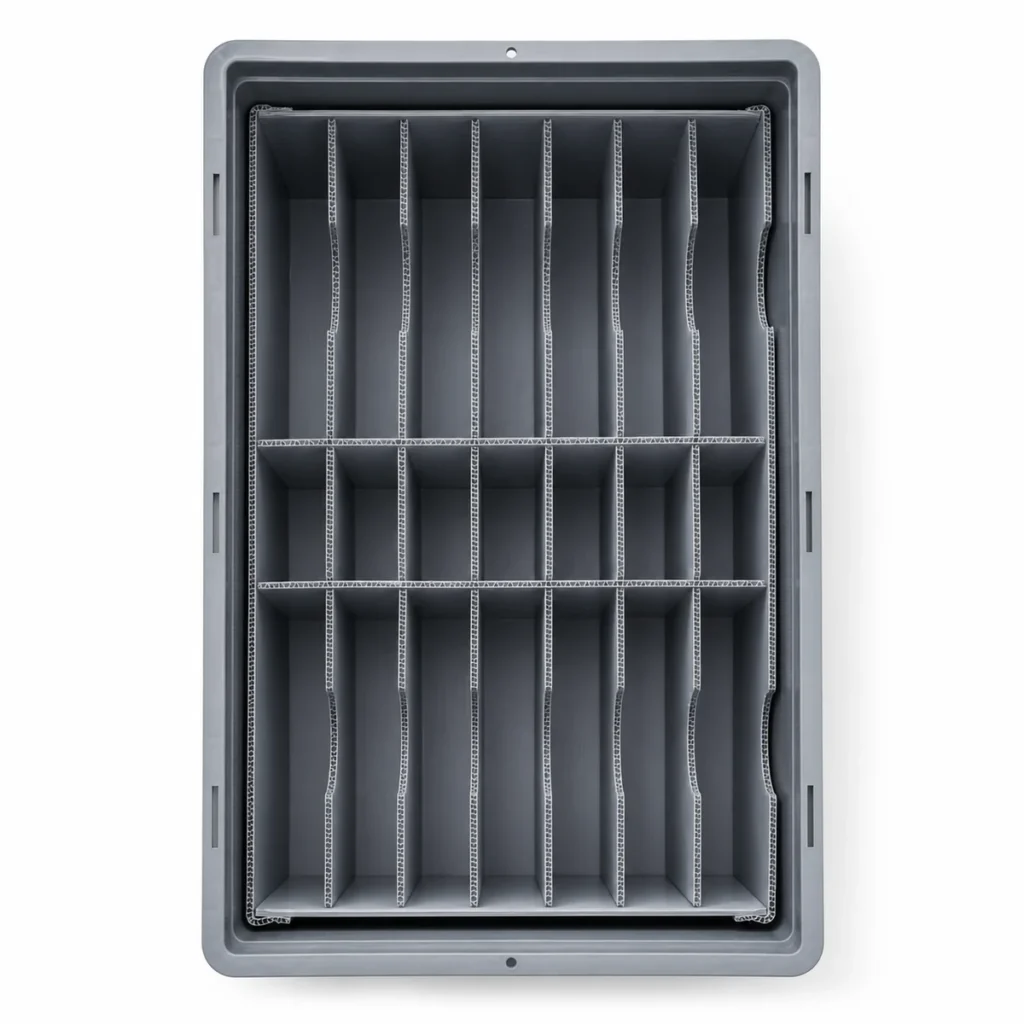
For example, fresh produce boxes can be made with ventilation holes. Boxes used for heavier products can have stronger bottoms or reinforced edges. Sizes can also be kept consistent so that stacking and storage become easier.
In a warehouse, that simply means things are easier to organize.
And in a supermarket or wholesale market, the same box can sometimes continue to be used for display.
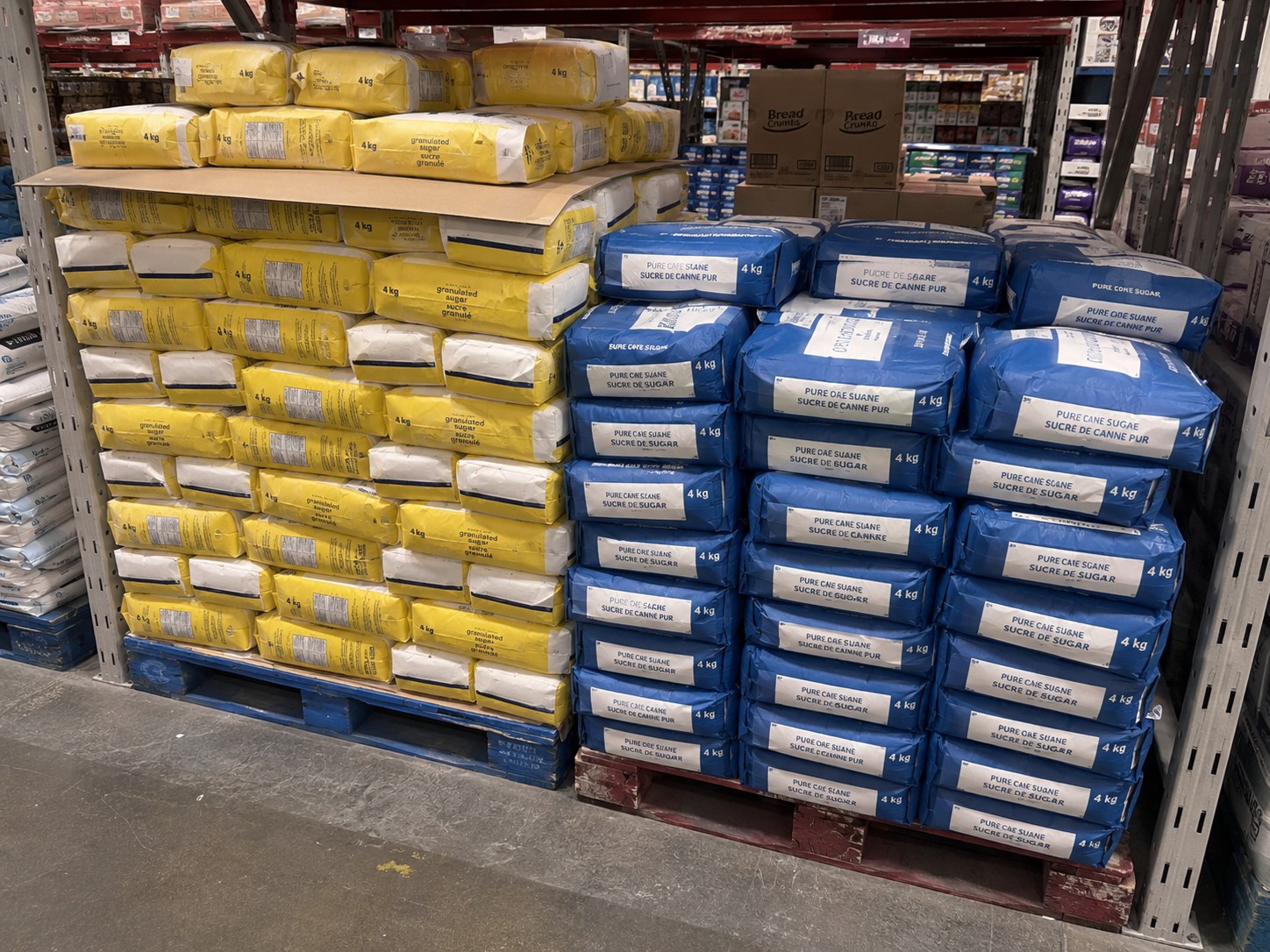
A clean, consistent stack makes the whole area look better, but it is not only about appearance. Products are easier to see, easier to count and easier to restock.
For fruit and vegetables, presentation matters as well. A tidy display naturally gives customers a better view of the product than a loose, messy pile.
One box doesn’t always mean one use
Another thing worth thinking about is cost.
We often compare packaging by asking:
How much is one box?
But for reusable packaging, that is only part of the calculation.
A PP corrugated plastic box may finish one delivery and still continue working in the warehouse, in internal handling, on the sales floor, or even in another delivery cycle.
So sometimes the better question is:
How many times can I use this box?
A box that stays in service longer may cost more at the beginning, but the cost is spread across every use.
Of course, reusable packaging does not make sense for every supply chain.
If the empty boxes cannot be collected or returned, reuse becomes difficult.
But for farms, packing houses, cold stores, distributors and retailers working within a regular supply loop, it can make a lot of sense.
Start with the product, not just the thickness
This is also why we don’t like starting every packaging discussion with:
“What thickness do you need?”
We would rather know what is actually going inside the box.
How heavy is it?
How high will the boxes be stacked?
Will they go into cold storage?
Will they be exposed to water or condensation?
Will the boxes be used again after delivery?
Those answers usually tell us much more than thickness alone.
Because packaging is not only about getting a product from A to B.
Sometimes the shipment arrives, but the box still has plenty of work left to do.