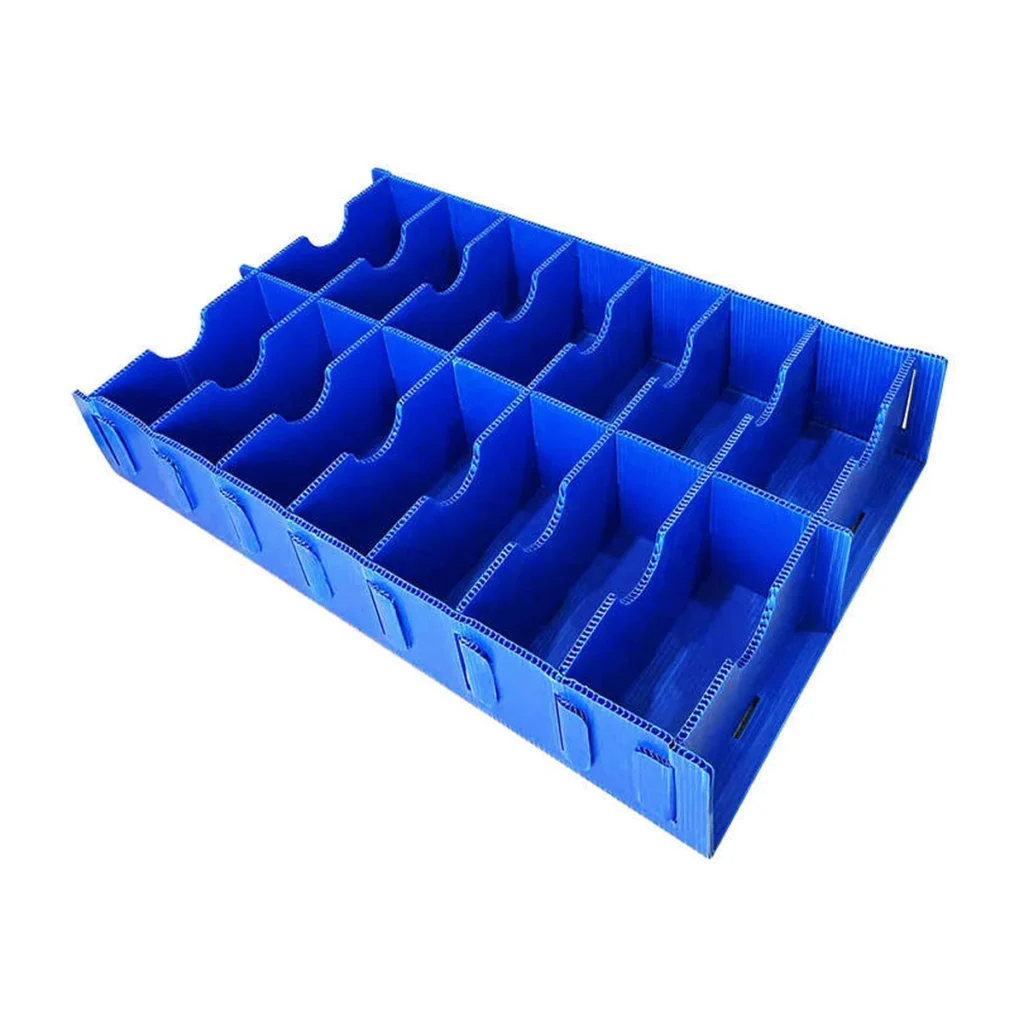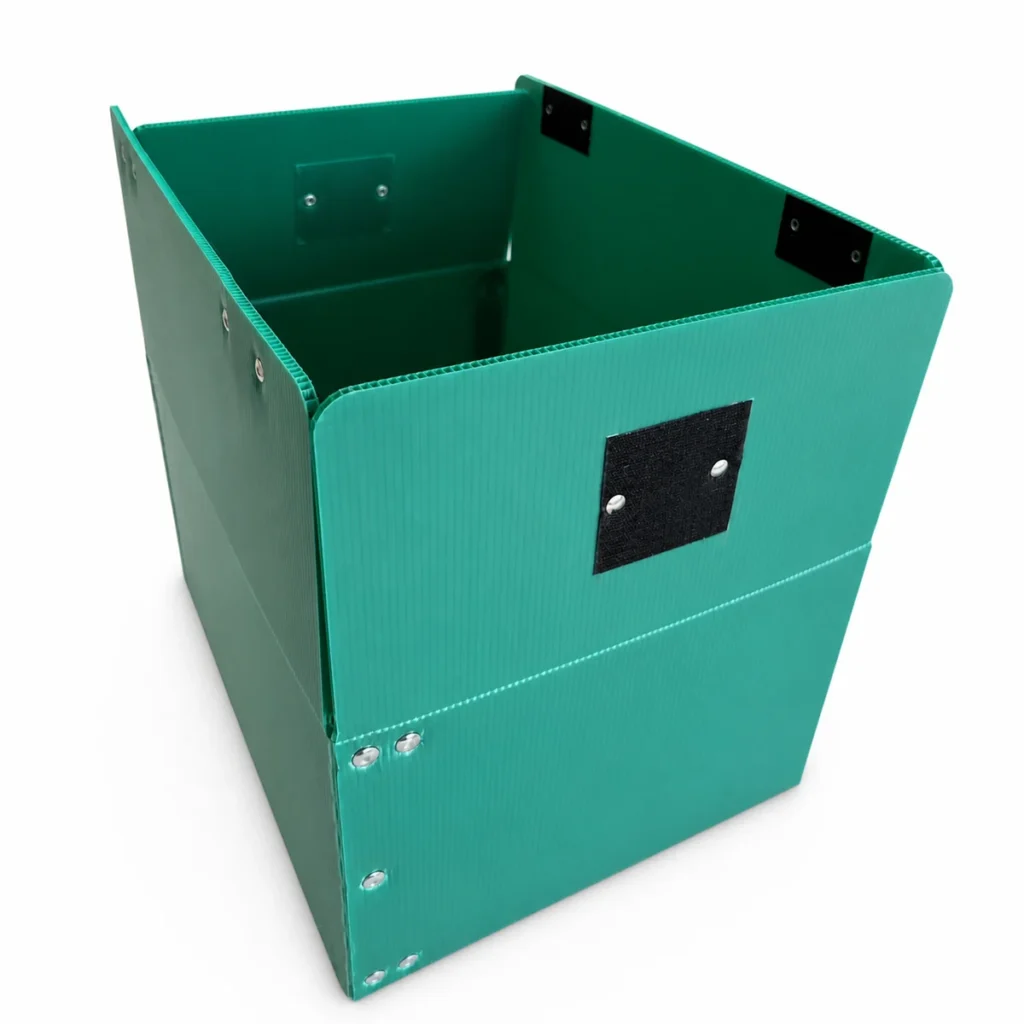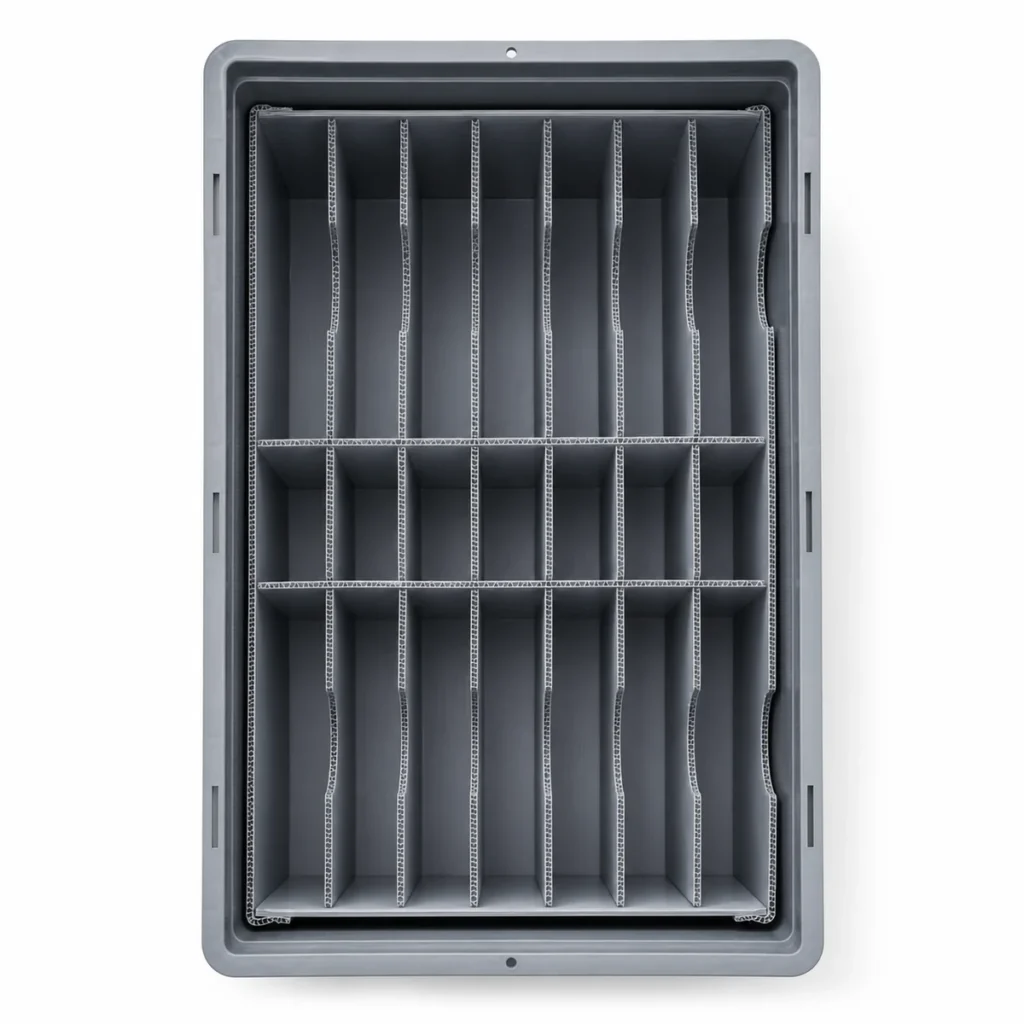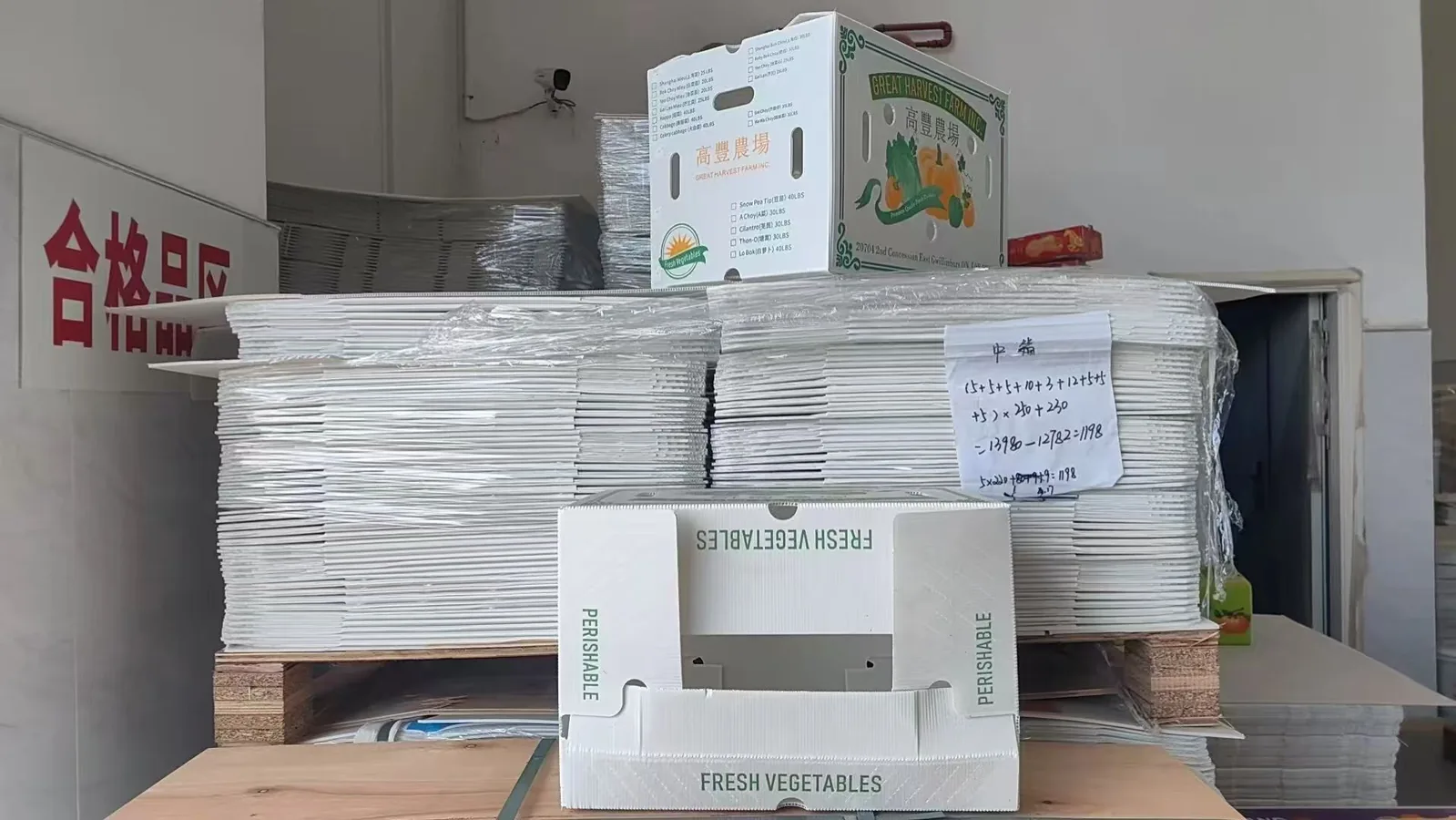
To support the PPWR direction toward packaging minimisation, reuse and more efficient material use, Xianghui Pack has developed a new low-resin, mineral-filled packaging material.
Its basic formulation contains:
- 30% post-industrial recycled PP (PIR)
- 70% calcium carbonate
The PIR material comes from clean and controlled production offcuts and process scrap generated during manufacturing. These materials are sorted, reprocessed and returned to production, helping reduce manufacturing waste and the use of virgin PP resin.
Our previous material formulation contained approximately 70% PP. On an equal finished-material weight basis, reducing the PP share from 70% to 30% represents approximately 57% less PP resin.
The higher calcium carbonate content reduces the amount of polymer required to manufacture the same weight of material. At the same time, the packaging is designed to provide the water resistance, stacking performance and repeated-handling capability required for reusable produce packaging, cold-chain and export applications.
For repeated factory, warehouse and closed-loop transport routes, review our warehouse and returnable logistics packaging guidance.
How Does This Product Relate to the PPWR?
This material supports several important PPWR directions:
- Lower PP resin content
- Reuse of controlled post-industrial production material
- Less manufacturing waste
- Design for repeated transportation and handling
- Longer packaging service life
- Potential material recovery at the end of use
However, post-industrial recycled material is not the same as post-consumer recycled material.
The minimum recycled-content targets under the PPWR refer primarily to recycled plastic recovered from post-consumer plastic waste. Therefore, the 30% PIR content in this product cannot automatically be counted toward the PPWR’s mandatory PCR targets.
The product should be positioned as:
A PPWR-oriented, low-resin and mineral-filled reusable packaging solution designed to support packaging minimisation and circular manufacturing.
It should not be described as fully PPWR-compliant based on its material formulation alone.
Food-Contact Considerations
When the packaging is intended to come into direct contact with fresh produce or other food, the PIR material must originate from clean, controlled and traceable food-contact production material.
The finished packaging must also be evaluated according to its intended food type, contact time and storage temperature. Applicable documentation and migration testing may be required before making a food-contact compliance claim.
Without this supporting evidence, terms such as “food-grade recycled PP” or “EU-certified food-contact recycled plastic” should not be used.
Biodegradability and Recyclability
Calcium carbonate is a mineral filler, but adding calcium carbonate does not make PP packaging biodegradable.
The environmental value of this product comes from reducing resin use, recovering manufacturing material, extending packaging service life and supporting material recovery—not from biodegradation.
Its practical recyclability will depend on local collection and sorting systems and whether recyclers in the destination market accept highly mineral-filled PP materials.